9.24.2013

Serra da Estrela

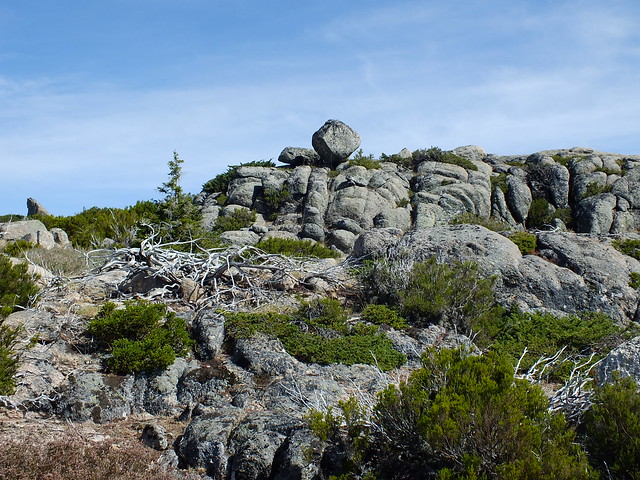
 Last weekend we travelled to Serra da Estrela, the highest mountain range in mainland Portugal. During two days we had the opportunity to visit various places along the mountain and have a better insight of its biodiversity.
The main objective was to collect flies but much more was observed.

  The upper belt has a characteristic set of plant communities and a rich variety of lichens (something like 250 species). Some examples are Lasallia cf. pustulata and Rhizocarpon cf. geographicum.
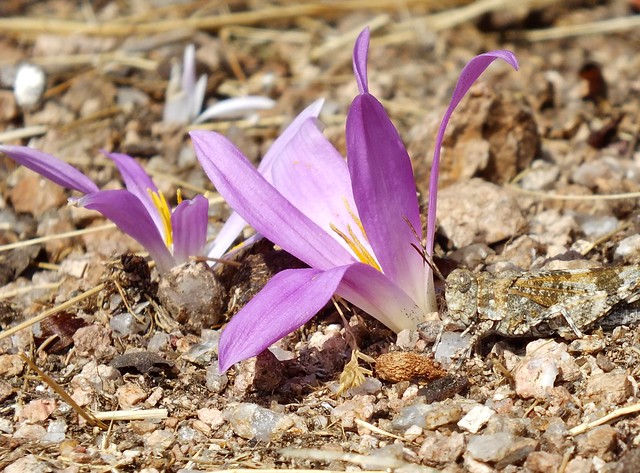
Merendera montana, a very interesting plant that lacks visible foliage during flowering...and if you pay attention there is also one specimen of Oedipoda coerulea next to it. 

9.18.2013

Interactions


Trichodes octopunctatus preying a cuckoo wasp (Chrysididae) while an incautious Oxythyrea funesta passes by. Below all the action, there was a spider, Mangora acalypha, that received small parts of the wasp.  (April, 2013)

9.15.2013


Here's two interesting flies that I found near home. The quality of the pictures is very low since I still don't have the lens needed to get a better magnification...


The first one belongs to the family Acroceridae, known for a very singular reason: its members are parasitoids of...spiders. They are beautiful flies with their hunchback and tiny heads.
Cyrtus gibbus was the first Acroceridae that I ever found and this year, for the first time, I found Acrocera orbiculus. All the specimens were resting under the leafs of Quercus faginea and seemed to be common.
In the same spot (but resting on Osyris alba) I also saw one specimen of Ogcodes zonatus. Unfortunately, I couldn't take a picture or collect it at the time.


Usually, Medetera spp. are found on trees, rocks, walls... but this one (as others already recorded) were on the ground, preying Collembola.

8.14.2013

Ochthera cf. manicata

 The flies belonging to the genus Ochthera (Ephydridae) have very distinctive forelegs that resemble the ones of the mantises. They are generalist predators and can be found in wetlands; the one from the picture was found in  Salreu (wetland near Aveiro) and seems to be O. manicata.


7.20.2013

Cicindela sp.

  The larvae of Cicindela spp. are carnivorous. They construct funnel-shaped burrows and wait for preys with their head and pronotum visible, closing the entrance. This one in particular was found in Salreu, Aveiro, and started a very prolific day.
  The picture itself is one of the first tries with a new camera (Fujifilm HS30) and lens borrowed from a friend. I hope to finally be able to take pictures to small flies, like Hybotidae and Dolichopodidae, in the near future :-)


7.18.2013

Hybrid between Ophrys tenthredinifera and Ophrys speculum

  Well, with the studies and other duties, I seldom have time to post here but there are many things from the last months that I'd like to show. Let's start with this orchid, found by Joaquim Pessoa (AOSP). I think that's one of the most beautiful hybrids that I ever saw!  
  The habitat, a scrubland, was composed by Cytisus sp., Pistacia lentiscus and other common plants. I saw many Diptera (a lot of Platypalpus spp.) and also amphibians, like Hyla arborea hiding in the middle of the bushes.  Picture taken in April, 2013


4.17.2013


   Os insectos possuem uma papel vital na polinização biótica de um grande número de plantas. Estas para os atraírem fazem uso de uma miríade de odores, cores e formas...Algumas oferecem uma recompensa, tal como o néctar ou o próprio pólen que servem de alimento, enquanto que noutras tudo se resume a um embuste sem qualquer vantagem para o insecto, como é o caso muito conhecido das do género Ophrys.
   Também os Arum são mestres no engano: produzem um odor que atraí diversos insectos (sobretudo moscas)...que acabam presos no interior da planta. Tudo isto porque os Arum são plantas monóicas, ou seja, a mesma planta possui os 2 sexos, mas é conveniente evitar a auto-polinização, assim, recorrem à maturação diferenciada dos órgãos reprodutores, sendo que na mesma população isso varia de indivíduo para indivíduo de forma a tornar possível a polinização cruzada.
   As moscas desta foto são Phoridae, tal como a maior parte dos indivíduos que encontrei (são aqueles filamentos mais claros que impedem que alcancem a saída, mais tarde estes hão-de murchar).


4.11.2013

Platypalpus sp. (Hybotidae)

Estas moscas são muito frequentes em silvados e em arbustos. Apesar do seu tamanho diminuto conseguem ser realmente vorazes...e deixam para trás inúmeros cadáveres de mosquitos. É muito curioso observar o que se passa nestes micro-habitats, que tantas vezes passam totalmente despercebidos.


3.10.2013

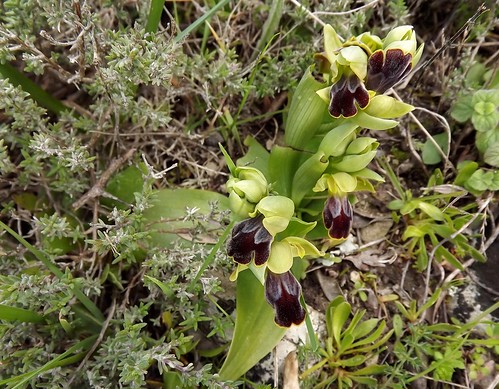
Ophrys pintoi

  No dia 3 de Março participei na saída de campo da AOSP para, entre outras coisas, observar a recentemente descrita Ophrys pintoi, uma miniatura da O. fusca que em algumas zonas surge em concentrações elevadas (contámos 40 exemplares num metro quadrado).

Variações de Ophrys pintoi 
Ophrys fusca 
 A minha favorita, observada no mesmo local:

Ophrys tenthredinifera


12.22.2012

Um tesouro do Buçaco...

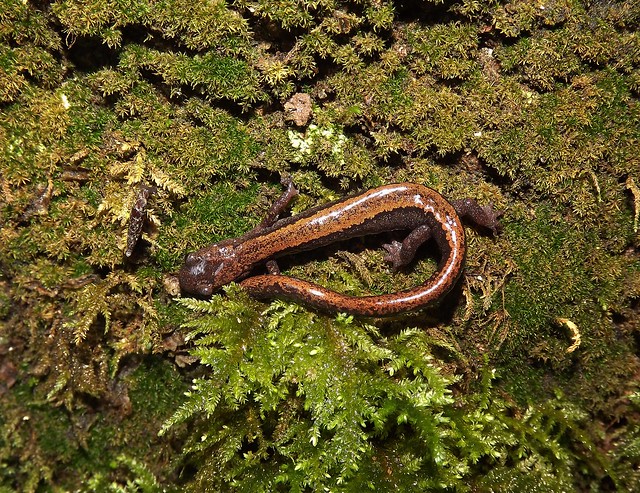
  Na Mata do Buçaco (ou Bussaco, como vos aprouver), especialmente em noites húmidas, encontra-se um endemismo ibérico especial: trata-se da salamandra-lusitânica, Chioglossa lusitanica, um anfíbio que, por possuir pulmões vestigiais, necessita de águas bastante límpidas e oxigenadas para sobreviver. Também aprecia vegetação e esconderijos em abundância, coisa que não falta por ali...
  Por causa do seu corpo esguio é um animal bastante rápido, não tendo nada a ver, por exemplo, com as pachorrentas Salamandra salamandra. Quando acossada por algum predador, caso não haja grande hipótese de fuga, possui um mecanismo de defesa quase ímpar nos anfíbios mas bastante comum em répteis: solta a cauda! Na Europa, mais concretamente no Cáucaso, existe a salamandra Mertensiella caucasica que é capaz do mesmo feito.
  Em Portugal, a C. lusitanica distribui-se por todo o noroeste, tendo por limite sul o rio Tejo.


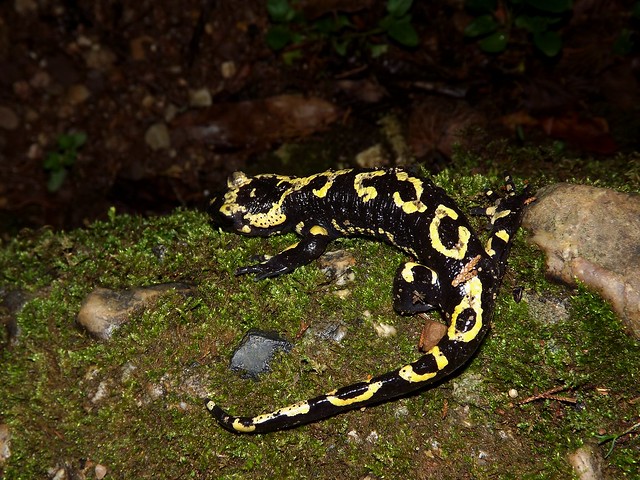
  E já que referi a Salamandra salamandra, aqui fica um exemplar que apresenta manchas em forma de ferradura, algo curioso. Encontrado na mesma noite, claro.